Team Trump and a Writ of Mass Murder — Tehran's Failed Coverup Scheme
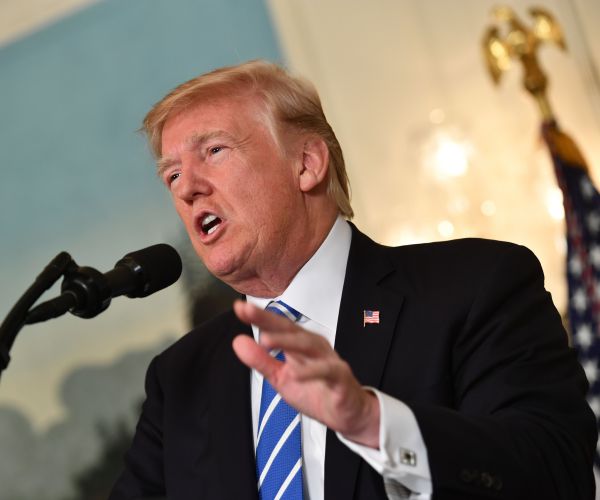
(Nicholas Kamm/AFP/Getty Images)
 By Raymond Tanter
Monday, 20 Nov 2017 10:49 AMCurrent | Bio | Archive
Bottom Line Up Front
The first objective is to bring those responsible to an international tribunal; a second is for the UN High Commissioner for Human Rights to set up a commission of inquiry on 1988 massacres by Iran; and third is to focus the Trump administration on the situation of human rights in Iran. A search of the UN Human Rights Council website reveals 15 General Assembly documents addressed to Iran about its human rights conditions, with scant effect on Iran’s violations.
After 28 years, Tehran drew a “redline” on anyone discussing these 1988 carnages, as elaborated in a post of June 4 by Siavosh Hosseini.
“Writ” is in the title to signal a writ of habeas corpus, “You have the body.” “Mass Murder” conjures up genocidal actions, by State authorities in Iran. “Tehran’s Failed Cover-up” indicates Tehran sought to hide the bodies, but hard evidence caused Tehran to fail. The bloodbaths turned into a yardstick to judge political currents of individuals.The Backstory
On Oct. 6, 2016, the Human Rights Activists News Agency reports several groups of political prisoners associated with the Peoples Mojahedin of Iran/Mujahedin-e Khalq (PMOI/MEK), the largest unit in the coalition National Council of Resistance of Iran (NCRI), were in prisons for “being enemies of God.”
Even without knowledge of a tape revealed on Aug. 9, 2016, with the voice of Ayatollah Montazeri condemning the Iranian regime for mass murders in 1988, the HRANA was on the right track in March 2015. Prior to the audiotape’s release, evidence of mass murders came from written sources, which were not as eye-catching as the recording. One written source of evidence: "Memoirs of Ayatollah Montazeri" (Persian edition).
The backstory to 1988 is precedent for using humanitarian crimes for bringing about a soft revolution within dictatorial regimes. The role of such crimes in undermining totalitarian regimes comes from a 2013 book by the author, "Arab Rebels and Iranian Dissidents."
The NCRI is concerned with threats Tehran poses to human rights of all Iranians, but particularly those who seek to end clerical rule. The NCRI is a coalition of dissidents cognizant of the key role of human rights in facilitating uprisings in communist control of Eastern Europe and accelerating the breakup of the Soviet Union. But to change the Iranian regime will require input from the Western supporters of human rights to complement the alliance of dissidents.
The Organization for Security and Cooperation in Europe (OSCE) played a huge role stimulating revolts in Eastern Europe. The OSCE originated from the Helsinki Final Act of 1975, which contained the principle of respect for the territorial integrity of States. Such wording institutionalized the Soviet view: The postwar map of Europe was set. But Moscow failed to realize transformative potential of the Third Basket of the Final Act. It had a major effect to legitimize transnational freedom of thought, religion, and belief for all without distinction as to race, sex, or language.
After consenting to the Final Act, the USSR no longer could assert Western efforts on behalf of human rights in the Warsaw Pact were illegitimate interference in their internal affairs. The American delegation to OSCE during 1983 focused international attention on human rights in the Soviet Union and Eastern Europe. Ambassador Max Kampelman’s efforts set the stage for 1989 revolts there and helped spur the collapse of communism.
Serving on Kampelman’s delegation as Personal Representative of the Secretary of Defense allowed me to witness firsthand the power of human rights to help bring down dictatorial states. The ongoing Arab revolts of 2010 lack the international commitment to human rights that backstopped uprisings in Eastern Europe.
Just as Washington supported human rights advocates in Eastern Europe, Team Trump could be more active in bringing worldwide condemnation to human rights abuses by the Islamic Republic of Iran. In fact, UN Amb. Nikki Haley has begun to so, undercutting the legitimacy of the regime and facilitating its downfall.
President Trump failed publicly to criticize China on human rights; he also has been reluctant to censor Iran on humanitarian grounds, focusing instead in a Nov. 18 meeting with President Macron on Iran’s support for Hezbollah. On May 5, Tillerson had said “goodbye” to human rights diplomacy; but he became more aggressive in censoring Iran on humanitarian grounds, by May 20.
There is a need to pull the Persian carpet from under the anti-American clerics with increased criticisms of their human rights situation in Iran. Doing so would help empower the main Iranian opposition, i.e., the NCRI. Illustrative of the precarious state of human rights in Iran is the negative effect on the resistance of Section 186 of the Islamic Criminal Code.
Competing Narratives Within the Iranian Regime About the Mass Murders
The Aug. 9, 2016, revelation of the audio recording of heir-apparent to Ayatollah Khomeini, Ayatollah Montazeri; he introduced competing narratives within the regime, and different stories gave inspiration to those seeking to shine light on the massacres of 1988.
On tape, Ayatollah Montazeri laments the Iranian “Death Committee.” It consisted of Hossein-Ali Nayeri, the regime’s Sharia judge; Morteza Eshraqi, its prosecutor; Ebrahim Raeesi, deputy prosecutor; and Mostafa Pour-Mohammadi, representative of the Ministry of Intelligence and Security (MOIS).
In response to whether he knew members of the MEK, Montazeri responded that he had no sympathy for them, yet the killings are wrong.
Montazeri adds, “The MEK are not simply individuals. They represent an ideology and a school of thought. They represent a line of logic. One must respond to the wrong logic by presenting the right logic. One cannot resolve this through killing; killing will only propagate and spread it.”
Reverting to the present study in view of the above backstory, the bottom line is that the narrative of the 1988 Massacres in Iran is precedent for using human rights abuses as a vehicle for perpetuating a soft revolution within dictatorial regimes.
The Way Forward
First, shine a light on the human rights record of Tehran by publicizing revelations of the Iranian regime, as revealed by Montazeri and the NCRI.
Second, conduct a full-court media blitz to pressure Trump, Tillerson, and Haley to place human rights violations of Iran on top of the table, in addition to its destabilizing the region, ballistic missile, and nuclear weapons testing.
Third, enhance the staff and increase funding for the UN Mission’s Economic and Social Affairs Section, which oversees normative work of the UN on human rights issues.
In short, Team Trump needs to step up its game on human rights violations by Tehran!
Prof. Raymond Tanter (@AmericanCHR) served as a senior member on the Middle East Desk of the National Security Council staff in the Reagan-Bush administration, Personal Representative of the Secretary of Defense to international security and arms control talks in Europe, and is now Professor Emeritus at the University of Michigan. Tanter is on the comprehensive list of conservative writers and columnists who appear in The Wall Street Journal, Townhall.com, National Review, The Weekly Standard, Human Events, The American Spectator, and now in Newsmax. To read more of his reports — Click Here Now.
Posts by Raymond Tanter
Trump Must Call Out Iran's Abuses in Wake of Jerusalem Speech
Human Rights Day and Iran's Suppression
View More Posts by Raymond Tanter
Newsmax Blogs:
John Gizzi: Remembering Ex-Rep. Jim Martin - The Man Who Put Alabama On Republican Path
Michael Reagan: It Took Courage for Denzel Washington to Speak the Truth
View More Newsmax Blogs
(Nicholas Kamm/AFP/Getty Images)
Monday, 20 Nov 2017 10:49 AMCurrent | Bio | Archive
Bottom Line Up Front
The first objective is to bring those responsible to an international tribunal; a second is for the UN High Commissioner for Human Rights to set up a commission of inquiry on 1988 massacres by Iran; and third is to focus the Trump administration on the situation of human rights in Iran. A search of the UN Human Rights Council website reveals 15 General Assembly documents addressed to Iran about its human rights conditions, with scant effect on Iran’s violations.
After 28 years, Tehran drew a “redline” on anyone discussing these 1988 carnages, as elaborated in a post of June 4 by Siavosh Hosseini.
“Writ” is in the title to signal a writ of habeas corpus, “You have the body.” “Mass Murder” conjures up genocidal actions, by State authorities in Iran. “Tehran’s Failed Cover-up” indicates Tehran sought to hide the bodies, but hard evidence caused Tehran to fail. The bloodbaths turned into a yardstick to judge political currents of individuals.The Backstory
On Oct. 6, 2016, the Human Rights Activists News Agency reports several groups of political prisoners associated with the Peoples Mojahedin of Iran/Mujahedin-e Khalq (PMOI/MEK), the largest unit in the coalition National Council of Resistance of Iran (NCRI), were in prisons for “being enemies of God.”
Even without knowledge of a tape revealed on Aug. 9, 2016, with the voice of Ayatollah Montazeri condemning the Iranian regime for mass murders in 1988, the HRANA was on the right track in March 2015. Prior to the audiotape’s release, evidence of mass murders came from written sources, which were not as eye-catching as the recording. One written source of evidence: "Memoirs of Ayatollah Montazeri" (Persian edition).
The backstory to 1988 is precedent for using humanitarian crimes for bringing about a soft revolution within dictatorial regimes. The role of such crimes in undermining totalitarian regimes comes from a 2013 book by the author, "Arab Rebels and Iranian Dissidents."
The NCRI is concerned with threats Tehran poses to human rights of all Iranians, but particularly those who seek to end clerical rule. The NCRI is a coalition of dissidents cognizant of the key role of human rights in facilitating uprisings in communist control of Eastern Europe and accelerating the breakup of the Soviet Union. But to change the Iranian regime will require input from the Western supporters of human rights to complement the alliance of dissidents.
The Organization for Security and Cooperation in Europe (OSCE) played a huge role stimulating revolts in Eastern Europe. The OSCE originated from the Helsinki Final Act of 1975, which contained the principle of respect for the territorial integrity of States. Such wording institutionalized the Soviet view: The postwar map of Europe was set. But Moscow failed to realize transformative potential of the Third Basket of the Final Act. It had a major effect to legitimize transnational freedom of thought, religion, and belief for all without distinction as to race, sex, or language.
After consenting to the Final Act, the USSR no longer could assert Western efforts on behalf of human rights in the Warsaw Pact were illegitimate interference in their internal affairs. The American delegation to OSCE during 1983 focused international attention on human rights in the Soviet Union and Eastern Europe. Ambassador Max Kampelman’s efforts set the stage for 1989 revolts there and helped spur the collapse of communism.
Serving on Kampelman’s delegation as Personal Representative of the Secretary of Defense allowed me to witness firsthand the power of human rights to help bring down dictatorial states. The ongoing Arab revolts of 2010 lack the international commitment to human rights that backstopped uprisings in Eastern Europe.
Just as Washington supported human rights advocates in Eastern Europe, Team Trump could be more active in bringing worldwide condemnation to human rights abuses by the Islamic Republic of Iran. In fact, UN Amb. Nikki Haley has begun to so, undercutting the legitimacy of the regime and facilitating its downfall.
President Trump failed publicly to criticize China on human rights; he also has been reluctant to censor Iran on humanitarian grounds, focusing instead in a Nov. 18 meeting with President Macron on Iran’s support for Hezbollah. On May 5, Tillerson had said “goodbye” to human rights diplomacy; but he became more aggressive in censoring Iran on humanitarian grounds, by May 20.
There is a need to pull the Persian carpet from under the anti-American clerics with increased criticisms of their human rights situation in Iran. Doing so would help empower the main Iranian opposition, i.e., the NCRI. Illustrative of the precarious state of human rights in Iran is the negative effect on the resistance of Section 186 of the Islamic Criminal Code.
Competing Narratives Within the Iranian Regime About the Mass Murders
The Aug. 9, 2016, revelation of the audio recording of heir-apparent to Ayatollah Khomeini, Ayatollah Montazeri; he introduced competing narratives within the regime, and different stories gave inspiration to those seeking to shine light on the massacres of 1988.
On tape, Ayatollah Montazeri laments the Iranian “Death Committee.” It consisted of Hossein-Ali Nayeri, the regime’s Sharia judge; Morteza Eshraqi, its prosecutor; Ebrahim Raeesi, deputy prosecutor; and Mostafa Pour-Mohammadi, representative of the Ministry of Intelligence and Security (MOIS).
In response to whether he knew members of the MEK, Montazeri responded that he had no sympathy for them, yet the killings are wrong.
Montazeri adds, “The MEK are not simply individuals. They represent an ideology and a school of thought. They represent a line of logic. One must respond to the wrong logic by presenting the right logic. One cannot resolve this through killing; killing will only propagate and spread it.”
Reverting to the present study in view of the above backstory, the bottom line is that the narrative of the 1988 Massacres in Iran is precedent for using human rights abuses as a vehicle for perpetuating a soft revolution within dictatorial regimes.
The Way Forward
First, shine a light on the human rights record of Tehran by publicizing revelations of the Iranian regime, as revealed by Montazeri and the NCRI.
Second, conduct a full-court media blitz to pressure Trump, Tillerson, and Haley to place human rights violations of Iran on top of the table, in addition to its destabilizing the region, ballistic missile, and nuclear weapons testing.
Third, enhance the staff and increase funding for the UN Mission’s Economic and Social Affairs Section, which oversees normative work of the UN on human rights issues.
In short, Team Trump needs to step up its game on human rights violations by Tehran!
Prof. Raymond Tanter (@AmericanCHR) served as a senior member on the Middle East Desk of the National Security Council staff in the Reagan-Bush administration, Personal Representative of the Secretary of Defense to international security and arms control talks in Europe, and is now Professor Emeritus at the University of Michigan. Tanter is on the comprehensive list of conservative writers and columnists who appear in The Wall Street Journal, Townhall.com, National Review, The Weekly Standard, Human Events, The American Spectator, and now in Newsmax. To read more of his reports — Click Here Now.
Posts by Raymond Tanter
Trump Must Call Out Iran's Abuses in Wake of Jerusalem Speech
Human Rights Day and Iran's Suppression
View More Posts by Raymond Tanter
Newsmax Blogs:
John Gizzi: Remembering Ex-Rep. Jim Martin - The Man Who Put Alabama On Republican Path
Michael Reagan: It Took Courage for Denzel Washington to Speak the Truth
View More Newsmax Blogs
Comments
Post a Comment